

The Ice Fishing Game Demo gives you a hands-on way to see the game’s pace, visuals, and bonus-style rhythm before you commit to anything. If you have only heard about the Ice Fishing Demo, this page explains what it usually includes and what it leaves out. You can treat it as a practice run, a feature tour, and a quick way to judge whether the game feels right to you. That makes the demo helpful for both first-time players and anyone revisiting the theme.
You will also see why people search for an Icefishing Game Demo or even an Icefishing Demo when they want the same experience under slightly different labels. The page also looks at prediction tools, because many players want to know how an Ice Fishing Predictor reads recent results. Instead of promising certainty, we focus on how demo play and prediction thinking fit together. That way, you get a clear, practical overview before making any move.

What the Ice Fishing Game Demo Lets You Experience
A demo build usually shows the game’s rhythm before any real stakes are involved, which is exactly why the Ice Fishing Game Demo is popular with curious players. You can test the reels, note the pace of each round, and see how features appear when the board opens up. The Ice Fishing Demo also helps you understand whether the visual style feels busy or easy to follow. In other words, it lets you learn by watching and tapping, not by guessing.
Many players use an Icefishing Game Demo to judge the feel of the interface on a phone or desktop before they spend more time on it. That matters because even a simple game can feel very different once the screen is smaller or the action starts moving quickly. A demo is useful precisely because it removes pressure and lets you focus on pattern recognition. When you know the layout, you can pay attention to the parts that actually affect your read.
What parts of the game can you practice?
In a good Ice Fishing Game Demo, the most useful thing you can practice is the timing of the round. You learn where the action starts, how quickly the screen changes, and which visual cues tend to appear before a feature triggers. The Ice Fishing Demo also shows whether the interface is easy to read at a glance. That matters because clarity often shapes how comfortable a player feels.
The demo is also helpful for building muscle memory with taps, holds, or other small interactions. Even if the game looks simple, the pace can catch you off guard when you are seeing it for the first time. Using an Icefishing Game Demo gives you room to make those small mistakes cheaply, which is better than learning them under pressure. After a few rounds, the structure usually feels much easier to follow.
What does the demo leave out?
A Ice Fishing Demo is still only a practice version, so it cannot teach you how a real outcome will unfold. You may see the same visuals and mechanics, but that does not turn the session into a forecast. It is better to think of an Icefishing Demo as a tour of the game rather than a promise about results. That distinction matters if you are comparing it with prediction tools.
The demo also leaves out the emotional difference that comes with real stakes. Once money is involved, players often read the same round more carefully and sometimes overreact to normal swings. A demo cannot fully reproduce that pressure, even when the Ice Fishing Game Demo looks identical on screen. So it is useful for learning, but not for measuring how you will feel under risk.
A solid Ice Fishing Demo usually gives you enough detail to learn the game without overwhelming you.
- The reel-and-catch rhythm, so you can learn timing in the Ice Fishing Demo.
- Feature triggers and bonus-style moments that show how the board can change pace.
- Visual effects, sound cues, and symbol behavior that help you read the game at a glance.
- A risk-free space to test controls before moving from the Icefishing Game Demo to play.
- Session length and interface flow, which matter when you want a quick practice run.
That combination makes the Icefishing Demo useful for short practice sessions, especially when you want to compare the feel across devices.
How Icefishing Predictor Shapes Predictions and Results Today

An Ice Fishing Predictor tries to make sense of recent results by looking for recurring patterns, not by changing the game itself. People often use Ice Fishing Predictions as a shorthand for that kind of pattern reading, especially when they want a quick view of what may happen next. The key point is that a predictor estimates, it does not guarantee. That is why good advice around it stays cautious.
When players search for Ice Fishing Result Prediction Today or a broader Ice Fishing Game Prediction, they are usually trying to connect the last few rounds with the next likely shape of play. That can be helpful for spotting volatility, but it can also be misleading if the sample is too small. A smart read pays attention to context, not just one hot streak. The more disciplined the approach, the more useful the tool becomes.
What data does a predictor usually read?
Most Ice Fishing Predictor tools start with recent round history, because the newest outcomes are often the easiest to compare. They may also look at feature frequency, result clusters, and the spacing between strong outcomes. When people talk about Ice Fishing Predictions, this is the kind of background they usually mean. It is not magic; it is pattern sorting.
The quality of the read depends on how much clean data is available and how stable the game looks in that stretch. If the sequence is too short, the tool may overfit noise and call random movement a pattern. That is why a cautious Ice Fishing Game Prediction can be more useful than a loud one. It gives you a frame, not a guarantee.
How often should you refresh the read?
A Ice Fishing Result Prediction Today can become outdated fast if several new rounds land in a row. That is why many players refresh their view after a meaningful change, not after every single spin or catch. The goal is to notice when the structure shifts, because an old Ice Fishing Predictions snapshot may already be stale. Fresh data matters more than confidence.
The best habit is to treat the predictor as a checkpoint rather than a final answer. If the game starts behaving differently, the tool should be re-read with that change in mind. A flexible Ice Fishing Predictor is more honest than a rigid one because it admits when the pattern has moved. That keeps you from forcing a story onto a short run of results.
A typical Ice Fishing Predictor works by turning recent history into a simple working read.
- It reviews recent rounds and looks for repeating patterns in Ice Fishing Predictor data.
- It compares those patterns with timing, volatility, and bonus frequency.
- It estimates which outcomes may appear more often in the next stretch.
- It updates the read when fresh results shift the picture.
That process sounds neat, but Ice Fishing Predictions still need judgment because short sessions can change very quickly.
Ice Fishing Result Prediction Today: What Players Watch
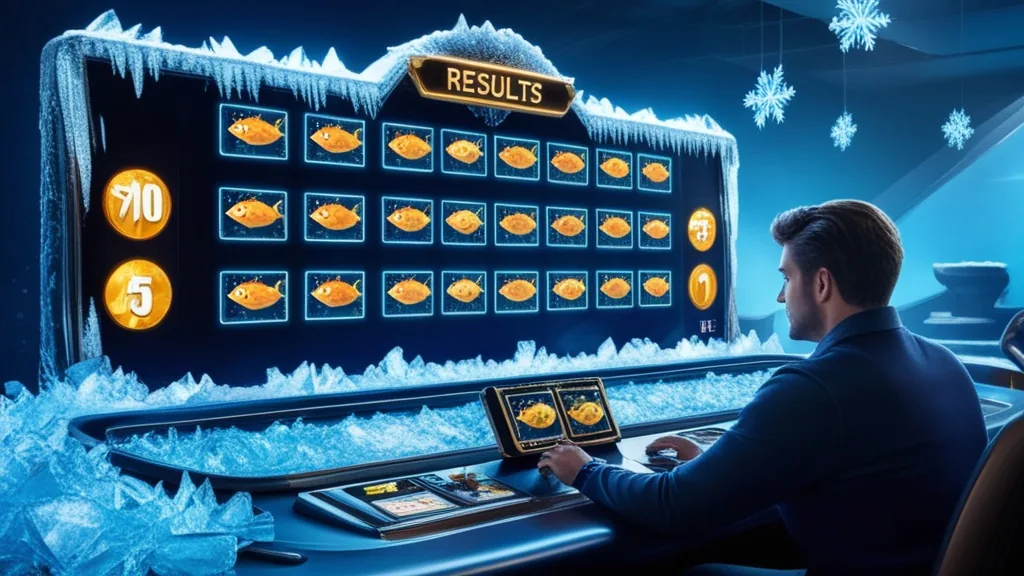
The phrase Ice Fishing Result Prediction Today usually means a player is checking what the latest run of outcomes suggests right now. In practice, they are often watching for streaks, pauses, and feature gaps that hint at how volatile the next round might feel. A sensible Ice Fishing Result Prediction is less about certainty and more about what has changed recently. That keeps expectations realistic.
Some players also frame the question as an Ice Fishing Prediction, which is broader and a little less time-sensitive. Others look at Ice Fishing Predictions across a session, trying to spot whether the game is warming up, cooling off, or simply moving in a noisy way. The useful part is not the label itself but the habit of checking evidence. When you know what you are reading, you can avoid overreacting.
Which short-term signals matter most?
In a short window, the most useful clues are usually consistency, spacing, and how often a feature appears. A strong Ice Fishing Result Prediction Today reads those clues together instead of isolating one lucky round. That is why short bursts can look more informative than a single headline result. The pattern, not the moment, is what matters.
Players also watch whether the game seems to be clustering outcomes or spacing them out evenly. If the board is changing pace often, the read should stay loose and adaptable. A careful Ice Fishing Result Prediction leaves room for noise because many sequences are just noisy by nature. That makes the judgment steadier.
How do streaks affect your interpretation?
Streaks are easy to notice, but they can be deceptive if you treat them as proof. A run of similar results may support an Ice Fishing Prediction, yet it can disappear just as fast as it appeared. That is why the best read asks whether the streak has enough context to matter. Without context, it is just a moment.
The same idea applies to Ice Fishing Predictions made from a short sample. If the sample is tiny, the output can feel accurate simply because it matches the last few rounds. A better habit is to ask whether the sequence is long enough to mean anything. If not, the smartest move is to stay cautious and watch one more cycle.
Comparing Icefishing Game Demo and Icefishing Demo Options
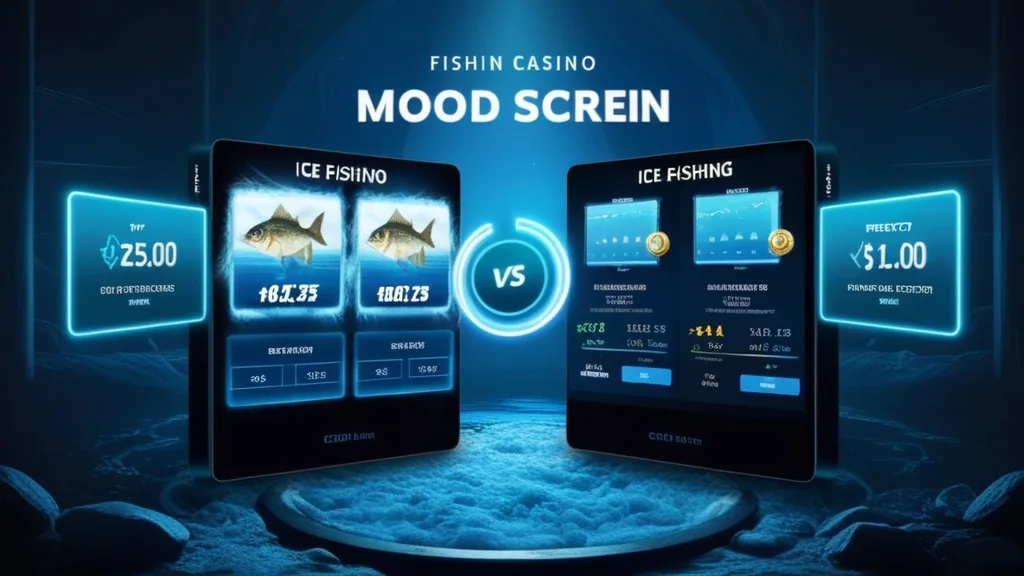
The labels Icefishing Game Demo and Icefishing Demo often point to the same practice idea, but they may appear in slightly different ways depending on the site or platform. That is why people sometimes think they are separate modes when they are really just different names for a demo entry. The Icefishing Predictor angle comes in when players want the demo and the result read to sit beside each other. The combination can be useful, but only if you know what each part does.
In most cases, the important question is not which label sounds cleaner, but which one gives you the clearest preview of play. Some pages emphasize the full game-style demo, while others keep the wording shorter and simpler. Either way, the goal is the same: to let you understand the mechanics before you look at predictions or results. That keeps the comparison grounded.
Are the two labels actually different in practice?
Usually, the answer is no, or not in any meaningful way. A site might call the practice mode Icefishing Game Demo while another trims it to Icefishing Demo, but the underlying purpose is the same. Both are there to let you explore the game without commitment. The label changes more often than the experience.
Where differences do show up, they are often about presentation, device flow, or how the page is organized. One version might open faster on mobile, while another may show more information around the game window. None of that turns it into a different game mode. It just changes how the demo is packaged.
Which option helps with learning faster?
If your goal is practice, the version that gives you the clearest view of the mechanics is usually the one to start with. A clean Icefishing Game Demo lets you learn the round structure and then compare it with what a Icefishing Predictor suggests. That side-by-side view can make the session more useful. You can see what the game actually does before you decide how to read it.
For many players, a simpler Icefishing Demo is enough because it reduces clutter and lets the game itself stand out. If you already know the theme, you may not need a long explanation, just fast access to the practice version. The best option is the one that makes observation easier. In a demo context, clarity beats style.
- Icefishing Game Demo
- Full practice interface, feature flow, and round controls
- Icefishing Demo
- A simpler demo entry or platform-named practice mode
- Predictor-supported preview
- Demo play plus pattern-reading notes
- Live-result tracking
- Recent outcomes and short session shifts
Reading Ice Fishing Prediction Signals Before You Make a Move

A lot of Ice Fishing Prediction work comes down to noticing small signals before you commit to a move. Players compare recent outcomes, watch for changes in rhythm, and decide whether the board looks stable or noisy. A thoughtful Ice Fishing Game Prediction does not pretend to be perfect; it just tries to be more informed than a guess. That makes it useful as a filter.
The smartest way to use an Ice Fishing Predictor is as one input among several, not as a final answer. If the Ice Fishing Result Prediction points one way but the live feel of the session points another, that tension is worth respecting. Good reading is about balance, not blind trust. When the signs disagree, caution usually wins.
What is a sensible way to check the signal?
Start by looking at the most recent rounds and then step back to see whether they actually mean anything. A careful Ice Fishing Prediction asks whether the result pattern is long enough to support a claim or just short enough to mislead you. That question alone filters out a lot of noise. It also keeps you from treating a fast change as a long-term trend.
After that, compare the current rhythm with the earlier part of the session. If the game looks steady, the Ice Fishing Predictor may be reading a stable stretch; if it looks jumpy, the read should stay flexible. The point is to connect the signal to the surrounding context. Without context, even a neat prediction can be shallow.
When should you ignore a prediction?
You should be skeptical when the sample is tiny, the pace has just shifted, or the session has too much random movement to read cleanly. In those cases, an Ice Fishing Result Prediction can be more distracting than useful. A prediction is strongest when it matches a wider pattern, not when it simply echoes the last result. That is a simple but important filter.
If the tool keeps changing its view every few moments, that may be a sign that the data is too noisy for confident use. A flexible Ice Fishing Game Prediction should accept uncertainty rather than hide it. When the read feels forced, it is often better to pause and wait for a clearer setup. That restraint is part of reading well.